Thailand Currency Exchange Guide for Bangalore Travelers 2026
Planning your Thailand holiday from Bangalore? Whether you are heading to Bangkok for a city break, Phuket for the beaches, Chiang Mai for the temples, or Koh Samui for island life — one of the most important things you need to sort before boarding is your currency exchange. This complete 2026 guide covers everything Bangalore travelers need to know about exchanging Indian Rupees (INR) to Thai Baht (THB) — the right way, at the best rates, with zero confusion.
1. INR to THB Exchange Rate in 2026
Understanding the current exchange rate is the foundation of smart currency planning. As of April 2026, the mid-market rate hovers around ₹1 = ฿0.346 Thai Baht. In practical terms:
| Indian Rupees (INR) | Thai Baht (THB) — Approx. |
|---|---|
| ₹1,000 | ฿346 |
| ₹5,000 | ฿1,730 |
| ₹10,000 | ฿3,460 |
| ₹20,000 | ฿6,920 |
| ₹50,000 | ฿17,300 |
| ₹1,00,000 | ฿34,600 |
Note: Retail exchange rates at authorized forex dealers will be slightly different from the interbank mid-market rate due to standard service margins. Always compare rates from authorized dealers rather than relying on online converter tools for the actual amount you will receive.
Over the last 90 days (January–April 2026), the INR to THB rate has moved between approximately ฿0.337 and ฿0.352. This level of fluctuation means timing your exchange even a few days earlier or later can make a meaningful difference, especially when exchanging large amounts.
For the most current and competitive INR to Thai Baht rates in Bangalore, visit Savi Forex’s complete INR to THB exchange guide or walk into one of their Bangalore branches for a live rate.
2. Why Exchange Currency Before You Travel to Thailand
Many travelers make the mistake of waiting until they land in Bangkok to exchange money. This is almost always the more expensive option. Here is why exchanging INR to THB in Bangalore before your departure is the smarter move:
Airport Exchange Counters Offer the Worst Rates
Whether it is Kempegowda International Airport in Bangalore or Suvarnabhumi Airport in Bangkok, airport forex counters typically charge markups of 10% to 15% above the mid-market rate. On a ₹50,000 exchange, that could mean losing ₹5,000–₹7,500 unnecessarily.
Hotel Desks Are Even More Expensive
Hotel currency exchange desks in Thailand are convenient but notoriously poor value. Margins can exceed 15–20%. Avoid them for any significant amount.
You Arrive With Local Cash in Hand
Arriving in Thailand with Thai Baht already in your wallet means no queues, no stress, and the freedom to take a local taxi, grab street food, or pay a tuk-tuk the moment you land — without hunting for an exchange counter.
Better Rate Certainty
Exchange rates fluctuate daily. Locking in your Thai Baht at a favorable rate from a reliable currency exchange in Bangalore before travel gives you peace of mind over your total travel budget.
3. How Much Thai Baht Should You Carry From Bangalore?
The right amount depends entirely on your travel style, destination, and length of stay. Here is a practical breakdown for Indian travelers:
| Travel Style | Daily Spend (THB) | Approx. in INR | What It Covers |
|---|---|---|---|
| Budget Backpacker | ฿1,500 – ฿2,500 | ₹4,300 – ₹7,200 | Hostels, street food, local transport, cheap temples |
| Mid-Range Traveler | ฿3,000 – ฿5,000 | ₹8,600 – ₹14,500 | 3-star hotels, sit-down restaurants, day trips, tuk-tuks |
| Comfortable Traveler | ฿5,000 – ฿8,000 | ₹14,500 – ₹23,100 | 4-star hotels, tours, rooftop dining, spa sessions |
| Luxury Traveler | ฿10,000+ | ₹28,900+ | 5-star stays, private transfers, fine dining, island hopping |
Pro tip: Always carry around 10–15% more Baht than your estimated budget to cover emergencies, unexpected entry fees, or splurge moments. It is always better to have leftover THB than to scramble for cash at a Thai ATM and pay conversion fees.
Thai Baht Cash vs Prepaid Forex Card Split
A good rule of thumb for Bangalore travelers heading to Thailand:
- 60% in Thai Baht cash — for markets, temples, street food, taxis, tips, and small vendors.
- 40% on a multi-currency forex card — for hotels, large restaurants, malls, and emergencies.
4. Where to Exchange INR to THB in Bangalore
Bangalore has several options for exchanging Indian Rupees to Thai Baht. Not all are equal. Here is a breakdown of your choices:
RBI-Authorized Forex Dealers (Best Option)
The best rates with full regulatory protection come from RBI-authorized money changers. These dealers are licensed under FEMA (Foreign Exchange Management Act) and must offer transparent, competitive rates. Savi Forex is one of Bangalore’s trusted RBI-authorized forex service providers offering Thai Baht and several other currencies at market-competitive rates, with no hidden charges.
Banks (Convenient, But Not the Best Rates)
Major banks like SBI, HDFC, ICICI, and Axis Bank offer currency exchange, but their forex margins tend to be higher than specialized dealers. Thai Baht availability can also be inconsistent at branches.
Airport Counters (Only in an Emergency)
Kempegowda International Airport has forex counters, but as noted above, they levy some of the highest markups in the city. Use them only if you have absolutely no other option.
Online Forex Platforms
Several online platforms promise good rates and home delivery of foreign currency. Be cautious — always verify that the platform is RBI-authorized. Delivery timelines may not suit last-minute travelers.
For a detailed walkthrough of how to get the best INR to THB deal in Bangalore specifically, read: Essential Guide for Exchanging INR to THB in Bangalore.
5. Thai Baht Cash vs Multi-Currency Forex Card: Which Is Better?
Both have distinct advantages and the smartest Bangalore travelers use a combination of the two. Here is a detailed comparison:
| Factor | Thai Baht Cash | Multi-Currency Forex Card |
|---|---|---|
| Best Used For | Street food, markets, temples, tuk-tuks, tips | Hotels, malls, restaurants, online bookings |
| Acceptance | Universal — even in rural areas | Good in cities and tourist zones |
| Exchange Rate | Fixed at time of exchange in Bangalore | Rate locked when you load the card |
| Safety | Risk of loss or theft | Can be blocked instantly if lost |
| ATM Fees | No ATM fees needed | May incur ATM withdrawal fees in Thailand |
| Reload Option | Not applicable | Can reload from India via app or online |
| Transaction Visibility | None | Full tracking via app |
Savi Forex offers a multi-currency forex card that lets Bangalore travelers load Thai Baht (and other currencies) at competitive rates before departure. It is a safer, smarter alternative to carrying large amounts of cash and eliminates the need to hunt for ATMs in unfamiliar streets.
6. RBI and FEMA Rules for Carrying Foreign Currency Abroad
India’s foreign exchange is regulated under FEMA (Foreign Exchange Management Act), administered by the Reserve Bank of India (RBI). Here are the key rules every Bangalore traveler must know before carrying Thai Baht out of India:
Foreign Currency Cash Limit
Indian residents traveling abroad can carry a maximum of USD 3,000 equivalent in foreign currency notes per trip for most travel destinations. The remaining foreign exchange (up to an overall limit of USD 10,000 per trip for leisure travel) can be carried in the form of a forex card or traveler’s cheques.
Liberalised Remittance Scheme (LRS)
Under the LRS, Indian residents can remit up to USD 2,50,000 per financial year for permissible purposes including international travel. Currency exchange for trips to Thailand falls within these limits for standard travel budgets.
PAN Card Requirement
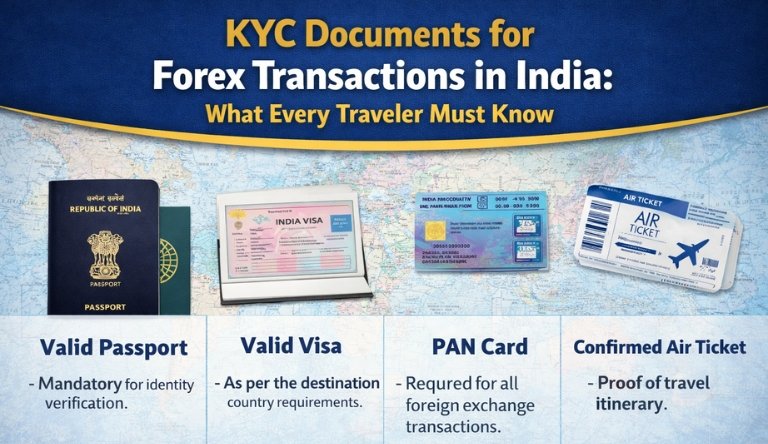
For currency exchange transactions above ₹50,000, your PAN card is mandatory. Ensure you carry it when visiting an authorized forex dealer.
Retain Your Exchange Receipts
Always keep the receipt from your authorized forex dealer. This is required if you wish to reconvert leftover Thai Baht back to INR upon your return to Bangalore.
Always Exchange Through Authorized Dealers
Exchanging currency through unauthorized channels is illegal under FEMA and can lead to penalties. Always use RBI-authorized dealers like Savi Forex’s authorized currency exchange in Bangalore for full legal compliance and best rates.
7. Common Currency Exchange Mistakes Bangalore Travelers Make
Avoid these costly errors that many first-time Thailand travelers from Bangalore fall into:
Mistake 1: Exchanging at the Last Minute at the Airport
Rushing to an airport counter on the day of departure almost always means accepting poor rates under time pressure. Plan your forex exchange at least 2–3 days before departure through a trusted Bangalore forex dealer.
Mistake 2: Using Your Debit Card at Thai ATMs Freely
Thai ATMs typically charge a flat fee of ฿220–฿250 per withdrawal for foreign cards (approximately ₹635–₹722 per transaction). Frequent small withdrawals from ATMs in Thailand add up quickly and are a very expensive way to access money.
Mistake 3: Converting INR to USD First, Then USD to THB
Some travel agents recommend converting INR to USD and then using USD to exchange for THB in Thailand. This double-conversion means two rounds of exchange markups, which eats into your travel budget. Exchange INR directly to Thai Baht in Bangalore.
Mistake 4: Trusting Street Money Changers in Thailand
Unlicensed street money changers in popular tourist areas like Khao San Road sometimes quote attractive rates, but travelers have reported receiving fake notes, short change, or illegal transactions. Always use licensed exchange booths in Thailand.
Mistake 5: Not Carrying Enough Small Denomination Baht
Thailand’s street economy runs on small bills. Ensure you have a good supply of ฿20, ฿50, and ฿100 notes for tipping, street food, and small purchases. Large denomination notes are not always welcomed by small vendors.
Mistake 6: Forgetting to Reconvert Leftover Baht
Leftover Thai Baht sitting in your drawer back in Bangalore depreciates over time as the exchange rate shifts. Reconvert unused Baht to INR promptly after your return through an authorized dealer.
8. Money Tips While Traveling in Thailand
Once you land in Thailand, here are practical money tips to stretch your Thai Baht further and travel smarter:
Use 7-Eleven for Small ATM Needs
Thailand has over 13,000 7-Eleven stores, many with ATMs. While foreign card fees still apply, they are conveniently located. Use them sparingly for top-ups only.
Negotiate at Markets — Politely
At places like Chatuchak Weekend Market in Bangkok or the Night Bazaar in Chiang Mai, polite bargaining is expected. Starting your offer at 50–60% of the asking price and settling around 70–75% is standard practice.
Always Pay in Thai Baht — Not INR
Some tourist shops, especially in Phuket and Pattaya, may offer to accept Indian Rupees. Never accept this — the rate they use is always unfavorable. Always pay in Thai Baht.
Avoid Dynamic Currency Conversion on Cards
When paying by card at Thai terminals, always choose to be charged in Thai Baht (THB), not Indian Rupees (INR). Choosing INR triggers Dynamic Currency Conversion (DCC), which means the merchant’s bank sets the exchange rate — and it is always worse than your card’s rate.
Keep USD as an Emergency Backup
Carrying a small amount of USD (around $100–$150) is useful as a last resort in remote areas or in genuine emergencies. USD is widely accepted as a secondary currency in tourist zones across Thailand.
Use Your Multi-Currency Forex Card for Big Expenses
Hotel bills, tour packages, and flight upgrades are better paid via your multi-currency forex card to keep your cash reserves intact for daily expenses.
9. Frequently Asked Questions (FAQs) — Thailand Currency Exchange for Bangalore Travelers
Q1. What is the INR to THB exchange rate in 2026?
As of April 2026, the mid-market rate is approximately ₹1 = ฿0.346 THB. This means for every ₹10,000 you exchange, you receive around ฿3,460. Retail forex counters in Bangalore typically offer slightly lower rates due to standard service margins. Check live rates at Savi Forex for the most up-to-date quote.
Q2. Where is the best place to exchange INR to THB in Bangalore?
The best place to exchange INR to THB in Bangalore is at an RBI-authorized money changer like Savi Forex. They offer competitive rates with no hidden fees, which is far better than airport counters or bank exchange desks.
Q3. Should I carry Thai Baht cash or use a forex card for Thailand?
Ideally, carry both. Use a multi-currency forex card for hotels, restaurants, and malls where cards are accepted, and keep some Thai Baht cash for street food, markets, tuk-tuks, and temples where cash is still king.
Q4. How much Thai Baht should I carry per day in Thailand?
Budget travelers typically spend around ฿1,500–฿2,500 per day. Mid-range travelers should budget around ฿3,000–฿5,000 per day. Luxury travelers in Bangkok or Phuket may spend ฿8,000–฿15,000+ per day.
Q5. Is it legal to carry Thai Baht from India?
Yes. Under RBI and FEMA guidelines, Indian travelers can carry foreign currency equivalent to USD 3,000 in cash (with the remainder in forex cards or traveler’s cheques, up to USD 10,000 total for leisure travel) per trip. Always exchange through RBI-authorized dealers and retain your receipts.
Q6. Can I exchange leftover Thai Baht back to INR in Bangalore?
Yes. RBI-authorized money changers in Bangalore, including Savi Forex, can buy back unused Thai Baht and convert them back to Indian Rupees. Keep your original exchange receipts for a smoother buyback transaction.
Q7. Does Thailand accept INR directly?
No. Thailand does not officially accept Indian Rupees. A few tourist shops may offer to take INR at unfavorable rates, but you should always exchange to Thai Baht before or immediately upon arrival.
Q8. What documents do I need to exchange currency in Bangalore?
For transactions above ₹50,000, you will need your PAN card. Additionally, your valid passport and travel tickets may be required by some dealers. Always carry your identity documents when visiting a forex counter.
Conclusion
Thailand remains one of the most popular international holiday destinations for travelers from Bangalore — and for good reason. The food, culture, beaches, and nightlife are world-class. But making the most of your trip starts well before you board your flight. Smart currency exchange in Bangalore, done through an authorized, transparent dealer, can save you thousands of rupees that are better spent on an extra beach day or a Michelin-starred street food experience in Bangkok.
Whether you need Thai Baht cash in hand, a loaded multi-currency forex card, or guidance on RBI-compliant foreign exchange, Savi Forex in Bangalore has you covered. Visit their currency exchange services page or read the detailed INR to THB Bangalore exchange guide to plan your forex before your next Thailand trip.
Safe travels and smart spending — Sawadee Krap! 🇹🇭