
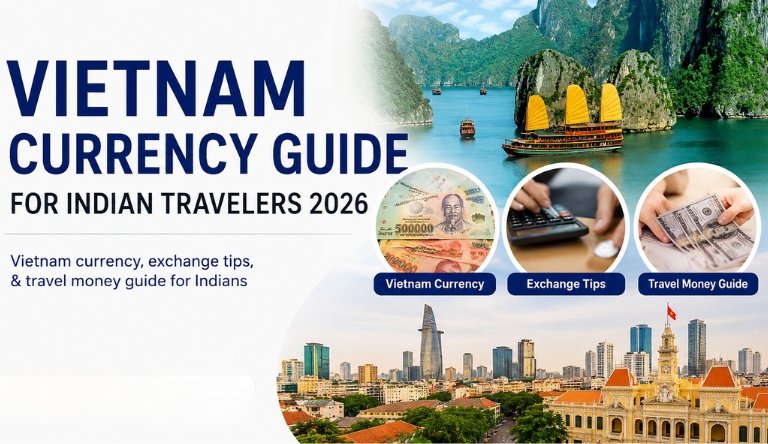
Vietnam Currency Guide for Indian Travelers 2026: Everything You Need to Know
Vietnam has steadily risen as one of the most popular travel destinations for Indian tourists. From the ancient temples of Hoi An and the breathtaking Halong Bay to the buzzing street food culture of Hanoi and Ho Chi Minh City, the country offers an extraordinary experience at a fraction of what most European or American destinations cost. But before you pack your bags, understanding Vietnam’s currency — the Vietnamese Dong (VND) — is essential to making your trip smooth, budget-friendly, and stress-free.
This guide from Savi Forex covers everything an Indian traveler needs to know about Vietnamese currency, current exchange rates, how to carry your money safely, and the smartest ways to exchange INR before you leave Bangalore.
What Is the Currency of Vietnam?
Vietnam’s official currency is the Vietnamese Dong, abbreviated as VND and represented by the symbol ₫. Unlike most other Asian currencies, the Dong comes in very large denominations relative to its value, which often surprises first-time visitors. You will regularly deal with notes in the range of 10,000 VND to 500,000 VND for everyday purchases.
Currency notes in Vietnam come in denominations of 500, 1,000, 2,000, 5,000, 10,000, 20,000, 50,000, 100,000, 200,000, and 500,000 VND. The higher-value polymer notes (100,000 to 500,000 VND) are the most commonly used in cities and tourist areas. Coins exist but are rarely used in day-to-day transactions.
One important thing to remember: because the numbers involved are so large, it is very easy to miscalculate spending. Always double-check before handing over cash.
INR to VND Exchange Rate in 2026
As of mid-2026, 1 Indian Rupee (INR) is approximately equal to 290 to 310 Vietnamese Dong (VND). This means:
- ₹1,000 INR ≈ 2,90,000 to 3,10,000 VND
- ₹5,000 INR ≈ 14,50,000 to 15,50,000 VND
- ₹10,000 INR ≈ 29,00,000 to 31,00,000 VND
- ₹50,000 INR ≈ 1,45,00,000 to 1,55,00,000 VND
Exchange rates fluctuate daily based on international forex markets, RBI guidelines, and local provider margins. Always check the live rate on the day of your exchange. For the best rates in Bangalore, contact Savi Forex directly to get a real-time quote before your transaction.
Why Indian Travelers Love Vietnam: A Quick Cost Overview
Vietnam is genuinely affordable for Indian travelers. Here is a rough idea of daily expenses in VND to help you plan:
- Street food meal: 30,000 – 60,000 VND (approx. ₹100 – ₹200)
- Mid-range restaurant: 150,000 – 300,000 VND per person
- Budget guesthouse per night: 300,000 – 500,000 VND
- Grab/taxi ride within city: 50,000 – 120,000 VND
- Local SIM card (7 days data): approx. 150,000 VND
- Entrance to major temples or museums: 50,000 – 150,000 VND
A week-long trip to Vietnam can be very comfortable at a budget of ₹40,000 to ₹70,000 per person (excluding flights), making it one of the best value destinations in Southeast Asia for Indian passport holders.
Best Ways to Carry Money in Vietnam
1. Multi-Currency Forex Card
A multi-currency forex card is the safest and most cost-effective way to carry your travel money. You load the card with a fixed amount at a locked-in exchange rate before departure, which means market fluctuations during your trip do not affect your spending. Forex cards are widely accepted at hotels, restaurants, and shopping centres across Hanoi, Ho Chi Minh City, Da Nang, and other tourist-heavy areas.
Key benefits of a forex card for Vietnam travel include:
- No dynamic currency conversion charges
- Lower transaction fees compared to debit or credit cards
- Easy to replace if lost or stolen
- Pre-loaded at a competitive rate, protecting you against sudden rate movements
- Accepted at international ATMs in Vietnam for VND withdrawals
2. Cash in Vietnamese Dong
While cards are convenient in cities, cash remains king in rural Vietnam, local markets, street food stalls, and smaller towns. It is advisable to carry some VND cash alongside your card. The best practice is to exchange a portion of your travel budget in Bangalore itself before departure, so you arrive with ready cash and avoid expensive airport money changers in Vietnam.
Savi Forex in Bangalore provides VND currency exchange at competitive rates with full RBI compliance, transparent pricing, and zero hidden charges.
3. ATM Withdrawals in Vietnam
ATMs are widely available in Vietnamese cities. However, they usually charge a withdrawal fee of 30,000 to 50,000 VND per transaction, and your home bank may levy additional international transaction charges. If you plan to use ATMs frequently, this can add up significantly. Using a forex card to withdraw VND from ATMs is typically cheaper than using your Indian debit card.
4. Avoid Airport Money Changers
Currency exchange kiosks at airports — both in India and Vietnam — generally offer unfavourable rates with high margins. Plan ahead and exchange currency in Bangalore before your trip. For the best rates and doorstep delivery options, reach out to the Savi Forex team at least 2 to 3 days before departure.
FEMA and RBI Rules for Indian Travelers Carrying Currency Abroad
Under the Foreign Exchange Management Act (FEMA), Indian residents can carry up to USD 250,000 per financial year for overseas travel and personal expenses under the Liberalised Remittance Scheme (LRS). For a short leisure trip to Vietnam, you are well within these limits.
Key points to remember:
- You can carry up to USD 3,000 (or equivalent) in cash when travelling abroad. Any amount above this must be on a forex card or traveller’s cheque.
- Always purchase foreign currency from an RBI-authorised money changer. Buying from unauthorized sources is illegal and risky.
- Keep your forex purchase receipts safe — you may need them for reconversion of unused currency on return.
Savi Forex is an RBI-authorised money changer in Bangalore, ensuring every transaction is fully compliant with Indian forex regulations.
Practical Currency Tips for Vietnam Travel
- Keep small denominations handy: Street vendors and local rickshaw drivers rarely have change for 500,000 VND notes. Always carry a mix of smaller notes for daily purchases.
- Bargaining is normal: In local markets, street shops, and with motorbike taxis, negotiating prices is culturally accepted. Know the approximate VND value of what you are buying before you start.
- Beware of counterfeit notes: Counterfeit VND notes do exist. Withdraw cash from reputable ATMs or exchange currency only through trusted providers to avoid fake bills.
- USD is widely accepted: In tourist-heavy areas, US Dollars are accepted alongside VND. However, you often get a worse deal paying in USD than in local currency, so always pay in VND when possible.
- Inform your bank: If you are using an Indian debit or credit card as a backup, notify your bank about your travel dates to avoid cards being blocked for suspicious international transactions.
Where to Exchange INR to Vietnamese Dong in Bangalore?
Getting Vietnamese Dong in India before departure is straightforward when you use a reliable RBI-authorised forex provider. Savi Forex, Bangalore offers INR to VND exchange at competitive market rates with full transparency. Whether you need physical currency, a multi-currency travel card, or both, Savi Forex covers all your travel forex needs.
Services offered by Savi Forex for Vietnam-bound travelers include:
- INR to VND cash exchange
- Multi-currency forex card loading and issuance
- Doorstep currency delivery in Bangalore
- Real-time rate quotes with zero hidden margins
- Complete FEMA-compliant documentation
To place an order or enquire about the latest INR to VND exchange rate, contact the Savi Forex team today. Their forex experts are available to guide you on the best way to carry your travel money based on your trip itinerary and budget.
Frequently Asked Questions (FAQs)
What is the currency of Vietnam?
The official currency of Vietnam is the Vietnamese Dong (VND). Notes come in denominations ranging from 500 VND to 500,000 VND.
How much Vietnamese Dong will I get for 1 Indian Rupee?
As of 2026, 1 Indian Rupee (INR) is approximately equal to 290 to 310 Vietnamese Dong (VND). Rates vary by provider and market conditions, so always compare before exchanging.
Should I carry cash or a forex card to Vietnam?
A combination of both is recommended. Carry a small amount of VND cash for local markets and street food. Use a multi-currency forex card for hotels, restaurants, and larger purchases to avoid high ATM withdrawal fees.
Where can I exchange INR to Vietnamese Dong in Bangalore?
Savi Forex in Bangalore offers competitive INR to VND exchange rates with transparent pricing and no hidden charges. You can also request doorstep delivery within Bangalore.
Is USD accepted in Vietnam?
Yes, US Dollars are accepted in many tourist areas. However, paying in Vietnamese Dong is usually more cost-effective. It is better to convert INR to VND directly rather than going through USD as an intermediate currency.


